

Site Search
Search within product
第719号 2020(R02).04発行
Click here for PDF version
§硬質小麦の高品質安定生産を実現する省力施肥技術の開発
Agricultural Research Division, Mie Prefectural Agricultural Research Institute
研究員 内山 裕介
(現 四日市農林事務所 四日市鈴鹿地域農業改良普及センター 鈴鹿普及課 主任)
§Seedling boxes and pooled seedlings go hand in hand.
Jcam Agri Corporation Tohoku Branch
技術顧問 上野 正夫
High quality stable production of hard wheat
実現する省力施肥技術の開発
Agricultural Research Division, Mie Prefectural Agricultural Research Institute
研究員 内山 裕介
(現 四日市農林事務所 四日市鈴鹿地域農業改良普及センター 鈴鹿普及課 主任)
Introduction
Mie Prefecture has a wheat crop area of 6,590 ha (2018 crop statistics from the Ministry of Agriculture, Forestry and Fisheries), and four varieties of hard and soft wheat are grown in the prefecture. Demand for prefectural wheat continues to outstrip supply due to strong demand from actual consumers, as evidenced by its use as an ingredient in the local delicacy "Ise Udon," and increased production of both hard and soft wheat varieties is required.
しかし,昔から「麦は肥料で獲る」と言われるように,麦栽培には施肥管理が肝心で,特に硬質小麦を高品質安定生産するには基肥施用に加え,3回の窒素追肥が必要となるため大きな労力を要する。また,生産現場では経営規模拡大により春先の水稲作との作業競合が生じ,生育後期の適期追肥を行えずに品質・収量が低下する場面が見受けられる。これらの対策として肥効調節型肥料による省力的施肥技術が望まれているが,今まで硬質小麦に特化した肥効調節型肥料はなかった。
そこで,省力的に硬質小麦を高品質安定生産することを目的に,硬質小麦用肥効調節型肥料の開発を検討したので紹介する。
Details of the study
(1) Study of labor-saving fertilizer application system
研究所内(松阪市)および現地圃場(玉城町)おいて,表1に示した省力施肥体系と慣行分施体系(追肥3回)を3年にわたり(2014年,2015年,2016年播種)比較検討した。
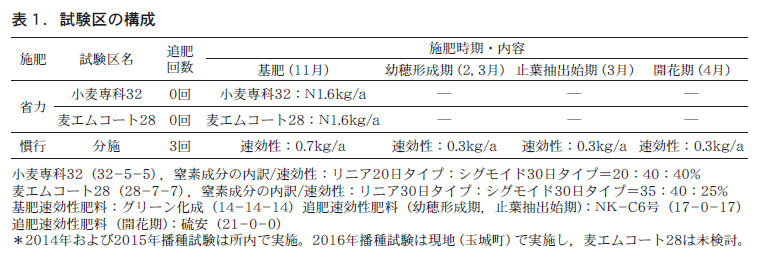
省力施肥体系は,速効性肥料:リニア20日タイプ肥効調節型肥料(以下,L20型):シグモイド30日タイプ肥効調節型肥料(以下,S30型)をそれぞれ20:40:40%の割合で配合した「小麦専科32」を試験資材とし,その参考として,県内で普及している既存の肥効調節型肥料である速効性肥料:リニア30日タイプ肥効調節型肥料(以下,L30型):S30型をそれぞれ35:40:25%の割合で配合した「麦エムコート28」(ともにジェイカムアグリ株式会社)を基肥時に窒素量1.6kg/aで全量施用した。
試験には県内の小麦栽培面積の約20%を占める硬質小麦「ニシノカオリ」を供試し,播種適期とされる11月上中旬(2014年11月7日,2015年12月2日(播種後の降雨により播き直しを行った),2016年11月18日)に播種した。
2)L20型とS30型の窒素溶出パターン
省力施肥体系で用いたL20型とS30型について,土中への埋め込みによる溶出試験を実施した(図1)。
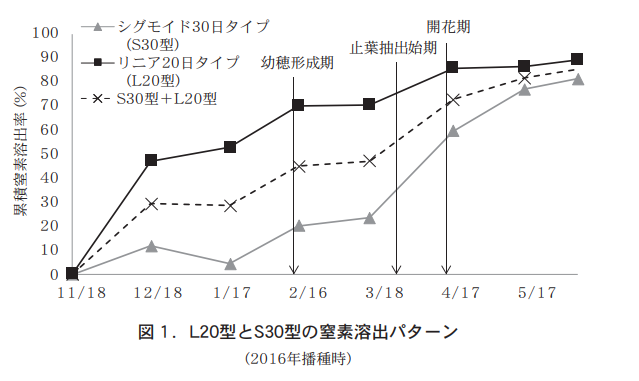
その結果,肥料窒素の溶出がL20型は播種後から幼穂形成期頃までに約70%の溶出を示した。一方,S30型は幼穂形成期頃から溶出が始まり,止葉抽出始期頃までに約20%,開花期頃までに約60%の溶出を示し,その後も溶出が持続した。
(3) Labor-saving fertilizer application system maintained the same level of growth as the conventional system throughout the growing season.
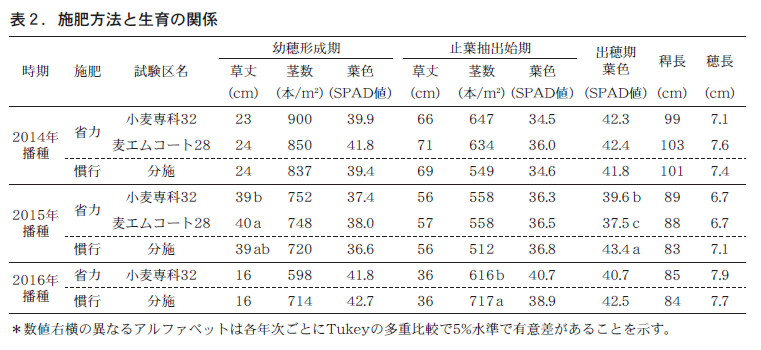
施肥方法と生育の関係を表2に示した。播種後から止葉抽出始期にわたり,省力施肥体系(「小麦専科32」および「麦エムコート28」)は分施体系と同程度の生育で推移した。また,このことから,前述の埋め込み試験の結果と同様に肥効調節型肥料からの窒素溶出が持続していることが確認できた。
4) "Wheat Senka 32" improves the quality of hard wheat compared to "Mugi M Coat 28
The relationships among yield, yield components, and protein content are shown in Table 3. In terms of protein content, one criterion for evaluating the quality of hard wheat, "Wheat Senka 32" had higher protein content than "Wheat M Coat 28," which is the same labor-saving fertilizer system, and improved the quality of hard wheat.
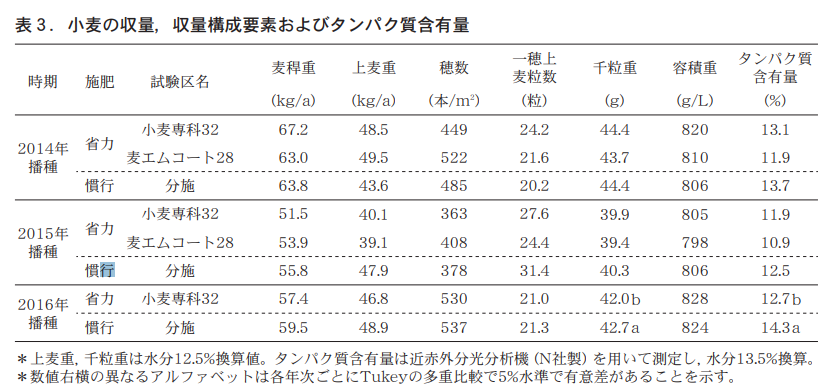
これは,開花期以降も窒素が継続して溶出するS30型が「小麦専科32」は「麦エムコート28」と比べて多く含まれることが寄与していると考えられた。
(5) Labor-saving fertilization system has the same yield and slightly lower protein content than the conventional partial fertilization system.
省力施肥体系は慣行施肥体系と比べて同等の収量(上麦重)となった。また,省力施肥体系は,2015年播種の「麦エムコート28」を除いて,硬質小麦のタンパク質含有量の基準値(11.5〜14.0%)を満たしたが,2015年および2016年播種のような出穂期の葉色が低い場合は,慣行分施体系と比べてタンパク質含有量がやや少なくなった(表3)。
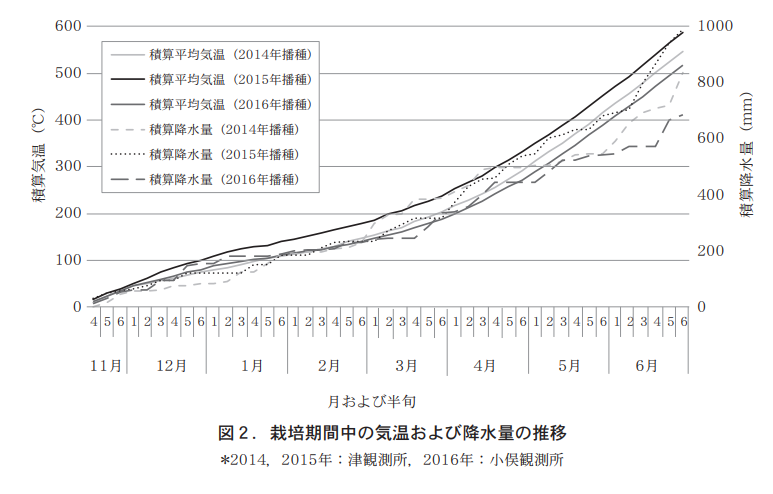
This was thought to be because labor-saving fertilization systems are affected by temperature and rainfall (Figure 2), and nitrogen leaching from flowering to maturity may be insufficient.
(6) Effects of labor-saving fertilizer application on the field
In recent years, the spread of labor-saving fertilizer application technology has reduced the number of farmers who say that they have missed the right time for fertilizer application. Labor-saving fertilization technology is becoming a "good-luck charm" for farmers that guarantees stable wheat production, and the time and mental leeway afforded by this "good-luck charm" are leading an increasing number of farmers to take initiatives aimed at achieving higher quality and yield.
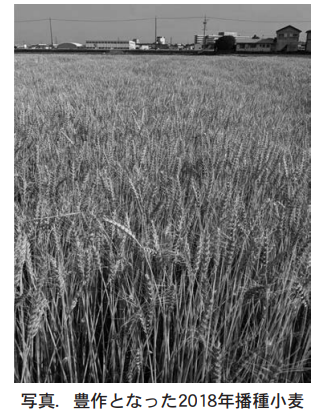
Thanks to these efforts, the prefecture's wheat crop sown in 2018 achieved the highest unit yield in recent years, and farmers in the field are becoming even more enthusiastic about wheat production. For example, an increasing number of farmers are taking on "things they have wanted to do but have not been able to," such as drainage measures, application of soil fertility materials, and multiple control of red mold.
Thus, labor-saving fertilizer application plays a role not only in wheat production but also in motivating farmers in the field, and is expected to continue to develop in the future.
Pooled seedling cultivation is a perfect match for boxed seedlings.
Jcam Agri Corporation Tohoku Branch
技術顧問 上野 正夫
Introduction.
Pool seedling cultivation is a method of seedling cultivation in which the seedling beds are surrounded by wooden frames and covered with plastic to enable waterlogged conditions. This method originated in Miyagi Prefecture, and has come into the limelight as a labor-saving water management method that allows seedlings to be flooded during the latter half of seedling growth, without the need to worry about frequent irrigation, especially after the Golden Week holiday season. The author has had a lot of experience with seedling management using the seedling box-assigned seedling management method, and believes that pooled seedling management is the best method for seedling management using the seedling box-assigned seedling management method. In particular, seedling box-assigned seedling growth may lead to insufficient moisture in the seedlings due to less bed soil than usual. We believe that the key to healthy seedling growth is to maintain the seedlings in a "water-supplied seedling bed" as soon as they are ready to sprout, which is why we promote pool-grown seedlings.
ここでは,その具体的方法について述べることにします。また,ゴールデンウィーク期間中に「ムレ苗予防対策」として,タチガレンエースM液剤の散布が必須的と考えており,その重要性についても指摘したいと思います。
1. what to do before sowing (salt water selection, disinfection, soaking, sprouting, shade drying)
塩水選は,充実した種子を選択し発芽を均一にするために行われます。なお,塩水選により保菌もみを除去することができ,種子消毒を併用することにより防除効果を高めることができます。塩水選の比重はうるちで1.13,モチは1.08で行います。浸漬は発芽に必要な水分を供給することが目的で,積算水温で100℃,籾重で20〜25%増加するまで行います。水温が15℃だと7日程度の浸漬日数が必要となります。
Insufficient soaking time will result in uneven germination, so it is important to allow sufficient time for water supply. In particular, soaking should be done in a net bag with plenty of space and shaken every 2 to 3 days to prevent uneven absorption of water. The water temperature should be kept below 15℃ and the water should be changed every 2 to 3 days. After that, the fully soaked paddy should be placed in a "pigeon chest" condition in a rice germinator. The soaking process is important in relation to the seeding process, and care should be taken not to allow the roots to emerge. The seedlings should be dried in the shade one or two days before sowing to prepare them for the sowing operation.
2. be careful with seedling bedding soil
育苗床土は,団粒が崩れにくく保水性と排水性に優れていることが重要で,pHは5〜5.5,速効性肥料として箱当たりN,P,Kそれぞれ2g程度必要で,育苗期の苗立ち枯れ病防除は防除基準に則って行います。苗箱まかせによる育苗も速効性肥料は必要で,箱当たりN,P,Kとも1g程度が適量であるので,従来使われていた育苗床土(苗箱まかせによる育苗床土は少なくて済むため)を使用して問題がありません。なお,育苗覆土は粒状の無肥料培土を使います。特に覆土が粉状化したものは泥状化し発芽に障害を及ぼすので粒状培土の使用を心掛けてください。
3. seedling growth is based on seed root elongation
健苗としての条件はまず「マット形成」です。田植機で植えられなければ健苗とはいえません。根がらみが良く,適度な苗丈(12〜16cm),苗のN濃度は3.5〜4.5%程度でロールマットの完成が求められます。また,軽量培土等は田植機の苗送り台で滑りが悪い場合が散見されます。事前に吸水させる必要があることに留意してください。
なお,当然ながら,徒長にならないよう十分な育苗管理が重要です。苗は生育後半より生育前半の方が伸びやすい性質があります。出芽長は簡単に伸びるし,第一葉鞘高や第二葉鞘高もすぐに伸び「ヒョロ苗」になってしまいます。健苗の代名詞である「ズングリ苗」にするためには,何よりも生育初期の伸びすぎに注意が必要です。特に,出芽長は1cm以内,葉鞘高も極力伸ばさないことです。出芽が伸びないリスクより伸びすぎのリスクが極大に大きいことを理解してください。以前は,苗が伸びず困ったなどの経験もあるでしょうが,ハウス育苗の時代に苗が伸びなくて困ったなどの問題はほとんどありません。
極端なことを言えば,芽が5mm程度に揃ったら即座に被覆資材を除去し,プール育苗の方は「水苗代状態」に管理してください。水稲は水の稲と書きます。出芽後水苗代状態にして全く問題がありません。これまで,出芽〜緑化期にかけては灌水を少なくして地温上昇に心がけてくださいと言ってきました。地温を上げることで根の伸長を助けることはその通りです。
しかし,ハウス育苗で地温が上がらない等の問題は起こり得ません。それよりも出芽揃い時以降の水分不足のリスクの方がはるかに大きいと考えます。苗箱まかせの育苗は土が少ない分水分不足が問題になるのです。プール育苗では,苗代初期にプール状態を維持できるのです。苗箱まかせとプール育苗の相性の良さはここにあるのです。
We have discussed the importance of rooting. The first thing that is necessary for good rooting is early budding growth. Needless to say, the initial growth of all plants is important. In rice seedling production, the goal is to achieve uniform growth without increasing bud length. Figure 1 shows the importance of self-sprouting roots (seed roots) as the key to seedling development. Rice seedlings depend on endosperm nutrients until the first leaf stage. Therefore, rice seedlings grow normally until the first leaf stage unless there is a serious problem.
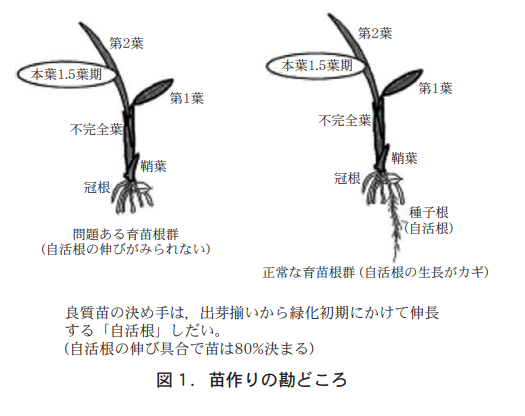
しかし,胚乳養分がなくなると自活根で養水分を吸い始めます。この自活根が伸びなければ水稲育苗は致命的になります。播種時に水分不足(育苗下まで水が届かず表面上だけに水がとどまる)をきたした苗は根が伸びずスポスポ引き抜ける状態になります。播種時のたっぷりの灌水が重要な理由がここにあります。苗箱まかせの育苗にとってこの自活根が伸び始めるときに水分が不足しないように管理することが何よりも重要なことです。
著者が苗箱まかせの「箱底施肥」を推奨している理由も,直下根が伸び始める時期の種籾の周囲状態を考えてみてください。苗箱まかせの「層状施肥」では種子と苗箱まかせが同居しております。箱底施肥は,箱の底に苗箱まかせがあるため種子の周囲は土となります。水分の保持状態に違いが生じます。箱底施肥を奨励する理由がここにあります。
We believe that box-bottom fertilization is superior, especially when irrigated from above. However, this does not mean that layered fertilizer application is to be rejected. If irrigation is done carefully and seedlings are grown in a pool, there is no problem with either layered fertilization or box-bottom fertilization. Again, it is important to keep the seedlings in a "waterlogged nursery" to prevent water shortage from the early stage of germination onward. This is why pooled seedling management is recommended.
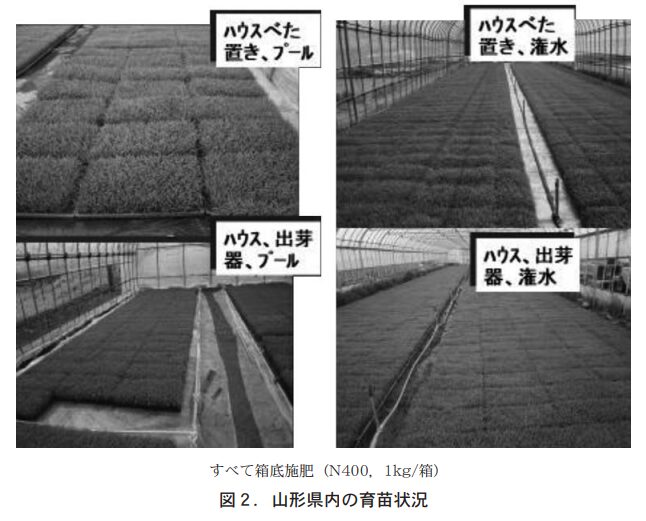
また,図2には山形県内での苗箱まかせによる育苗状況を示しました。ハウス育苗での育苗の形態は,出芽器にかけるか,かけずに直置きするか,育苗の灌水方法が上からの灌水かプール灌水かの4通りとなります。ここでの苗箱まかせの施肥量はすべて箱底施肥でN400−100を現物で1kg/箱での結果です。すべて良好な育苗が達成されております。
4. the occurrence of uneven seedlings
Mushy seedlings are the biggest problem for paddy rice seedlings. Mushy seedlings initially show physiological symptoms, but when Pisum sativum is involved, the disease spreads rapidly and causes seedling dieback. In the field, the problem is rarely observed until Golden Week.
After Golden Week, the seedlings will have two leaves fully developed and three leaves will begin to emerge. In short, the leaf area index reaches its maximum. During this period, temperature fluctuations are likely to occur due to frequent high and low temperatures. In particular, excessive high temperatures and low temperatures can easily lead to saplings that are saprophagous. In short, at this time of the year, the seedlings are in a struggle between the disease and the seedlings. If the seedlings grow too long and soft, they will be susceptible to disease. If the root growth is strong and the seedlings grow into small, slimy seedlings, the disease will be overcome and the seedlings will grow normally.
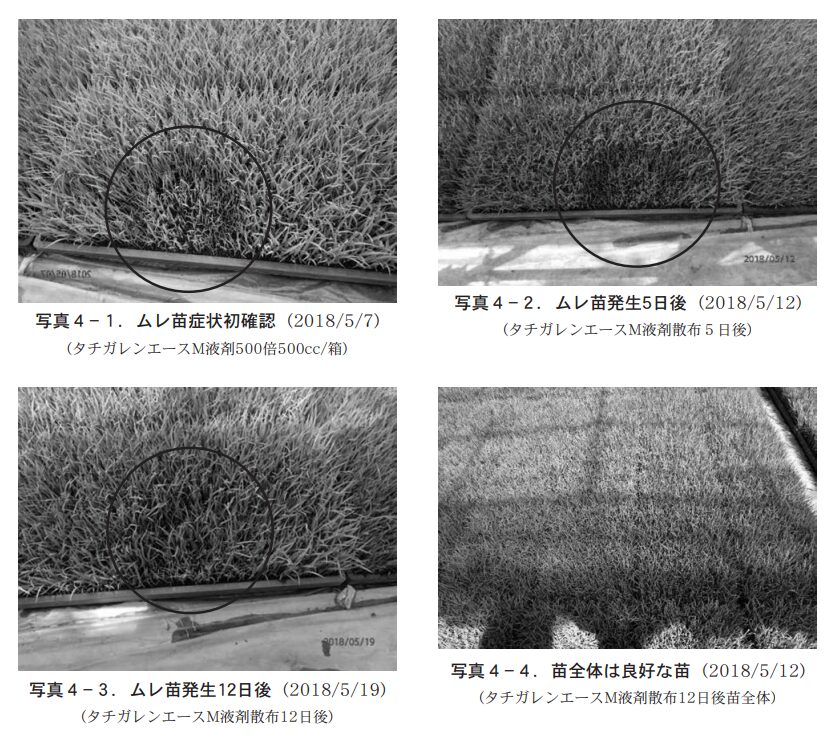
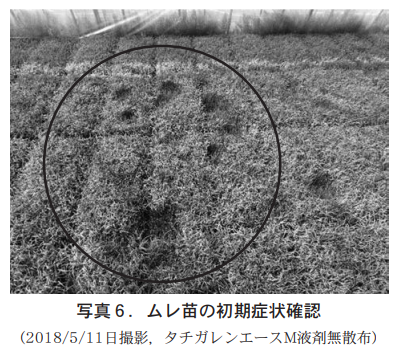
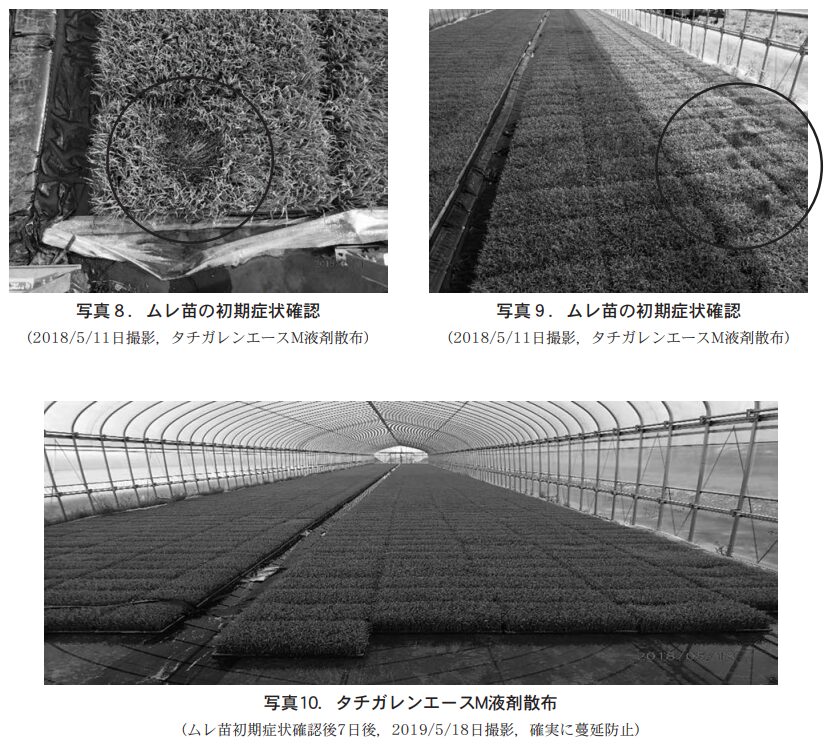
以前,床土は自家生産が一般的な時代はタチガレン粉剤の混入は容易に行われていました。ところが,購入培土が普及するにつれタチガレン粉剤の散布が行われなくなることが多くなってしまいました。この場合は,ゴールデンウィーク以降に現れるムレ苗の初期症状(円形状に現れる場合が多い)を見逃さないことです。その時点で即座にタチガレンエースM液剤500倍,500cc/箱を散布してください。ムレ苗に罹った苗の症状は治りませんが,周囲への蔓延を確実に防止します。
タチガレンエースM液剤は500cc瓶で3000円強の値段です。この500cc1本で育苗箱500枚を賄うことができます。ムレ苗の初期症状を見逃さないでください。
5.ムレ苗初期症状後直ちにタチガレンエースM液剤散布
写真4−1〜4−4はムレ苗が発生し,即座にタチガレンエースM液剤500倍,500cc/箱を散布した後の育苗状態を示しました。タチガレンエースM液剤でムレ苗に罹った症状は治りませんが,最終田植え時点の苗は完全にムレ苗蔓延防止につながっております。
6.ムレ苗初期症状把握したもののタチガレンエースM液剤無散布の場合
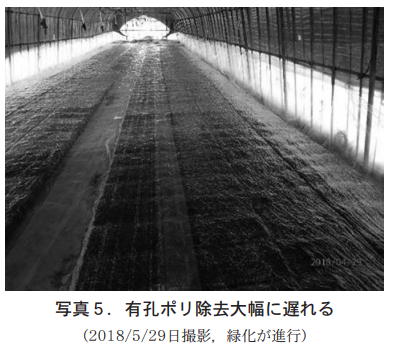
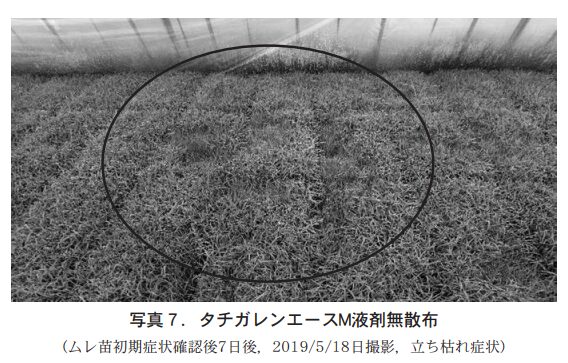
この苗は4/21日に播種(有孔ポリにて被覆),4/29日,有孔ポリ被覆除去が大幅に遅れ,有孔ポリの中で緑化が進んでいた状態にあります。生育は徒長気味ですが良好でした。この状態で5/11日にムレ苗の初期症状を確認しました。この時点でタチガレンエースM液剤を散布すべきところ散布しませんでした。もともと有孔ポリの除覆が大幅に遅れたことによる軟弱な生育状況が問題ですが,ムレ苗初期症状(ムレ苗の典型的な円形症状)を確認した直後のタチガレンエースM液剤散布をしなかったことが問題なのです)。
7.ムレ苗初期症状後直ちにタチガレンエースM液剤散布した場合
この苗も連休後の同じ5/11日にムレ苗の初期症状を確認,担当農家が即座にタチガレンエースM液剤500倍,500cc/箱を散布したため,ムレ苗の蔓延を完全に防止。5/18日の田植え時点では,ほんの一部で立ち枯れが確認できたものの田植えには全く問題がありませんでした。ムレ苗初発生確認時のタチガレンエースM液剤500倍,500cc/箱の散布が重要なのです。
Conclusion
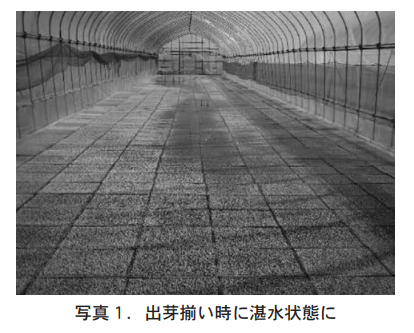
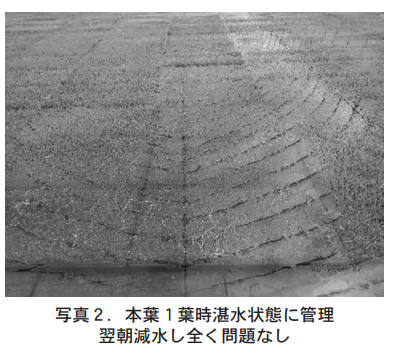
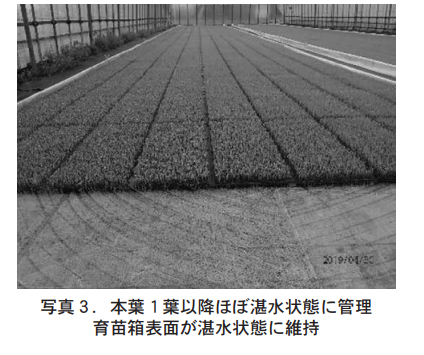
プール育苗は従来1.5葉期以降,中後期の水管理に用いられてきました。しかし,苗箱まかせの育苗には,出芽初期から生育中期にかけて湛水状態に維持できることを最重視しております。写真1,2に示したように,出芽が0.5cm〜1cmに出揃ったら即座に湛水状態を維持します。プール敷設の状態によって湛水状態が異なりますが一向にかまいません。水がなくなったら1〜2日後に湛水すればよいのです。1葉期以降は,箱の上部が湛水するような状態を維持します。これでマット形成の優れた苗を完成させることができます。苗箱まかせにプール育苗は相性抜群なのです。
つぎに,ゴールデンウィーク以降に散見される「ムレ苗」,それまで全く問題が生じなかった育苗で「ムレ苗」に侵されれば一朝一夕にして無残な状態に陥ります。まずは「ムレ苗」の初期状態を把握することです。初期状態である円形症状を確認したら即座にタチガレンエースM液剤500倍,500cc/箱を散布することです。症状が出た苗は治癒しませんが確実に蔓延を防止できます。ここ何年か「ムレ苗」症状に悩んでいる場合は,ゴールデンウィーク後半に予防的にタチガレンエースM液剤500倍,500cc/箱の散布を行い,健全な苗を安心して作りたいものです。